
Ames Previous Residents Across the Record Eras
No single source covers the full life of an Ames address. The present parcel supplies a stable start, the deed index follows title, and address-based publications help reveal who lived there. Use this table to choose a first stop without treating its listed years as proof of continuous coverage.
| Record source | Known span | Access point | Best evidence |
|---|---|---|---|
| Iowa Land Records | County describes about 1860 forward | Online Story County index | Grantor, grantee, date and instrument |
| Story deed and town-lot books | Series begin in 1853 | State Historical Society | Older title links by name, lot, book and page |
| Ames city directories | Selected years from 1899; 1963-present | Library Heritage Room | Listed names, addresses and householder data |
| State and federal census | Periodic released schedules | Library databases and microfilm | Household snapshots |
| Sanborn and city maps | Selected maps, 1896-1961 | Library, museum and City Planning | Structure and street context, not names |
| Ames Tribune archive | Back to 1877 | Library archive and microfilm | Notices, obituaries and address mentions |
A recent question should begin with the current parcel and Recorder trail. For a twentieth-century household, add a directory and the nearest census. For nineteenth-century land, expect an index book, town-lot description, and archive help rather than a modern address search.
Anchor Ames Previous Residents to Today’s Parcel
Search the address through the Ames assessor link or Story County GIS, then save the PARCELID, OwnerName, FullSitus, Legal, SecTwpRange, deed date, book and page, and instrument number. The parcel service separates MailOwnerName and mailing lines from the situs. A tax mailing address may be elsewhere and does not prove that the owner lives at the Ames property.
The legal description and parcel number are the best bridge when a road was renamed or an old deed lacks a usable street number. Story County formats a parcel number as XX-XX-XXX-XXX, tied to township, section, block, and parcel. Preserve leading zeroes. A map click aids discovery, while the recorded deed, plat, or survey controls a legal boundary question.
Walk the Story County Deed Chain Backward
The Iowa Land Records basic search lets a researcher select Story County, dates, party role, a person or company name, and document type. Search 2.0 is free with an individual account, though detail, image, and daily viewing limits may vary.
- Copy the current owner, deed reference, and legal description from the parcel record.
- Search that owner as grantee and match the purchase instrument to the same land.
- Record the grantor, date, book/page or instrument number, and prior-deed reference.
- Search that seller as an earlier grantee, checking initials and spelling variants.
- Repeat until the index ends, then move to Recorder books or state archives.
- Grantor and grantee
- The grantor transfers an interest; the grantee receives it.
- Chain of title
- The linked sequence of recorded transfers for the same land.
- Legal description
- The lot, block, subdivision, or survey description that persists when a street label changes.
The official deed-index screen shows the controls used to begin this search.
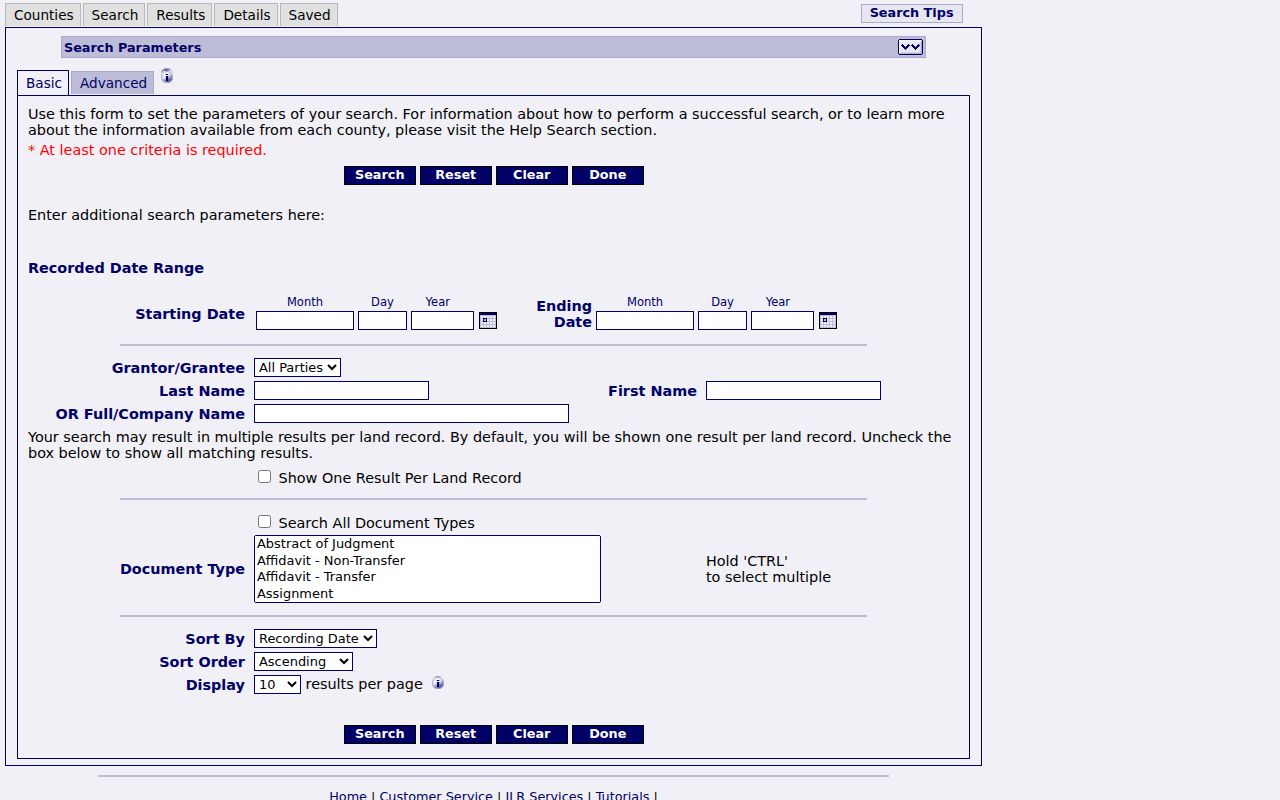
Keep the Story County filter and legal description in view so a same-name landowner does not pull the chain onto another parcel.
Ames Previous Residents Before the Online Cutoff
Story County says property history reaches back about 1860, but that describes its practical search route, not the start of surviving records. The State Historical Society Story County guide lists deed-land indexes from 1853-1912, deed records from 1853-1906, town-lot indexes and records from 1853-1902, and homestead records from 1862-1927.
The archive page shows why a clean web result is only one layer of the previous residents trail.
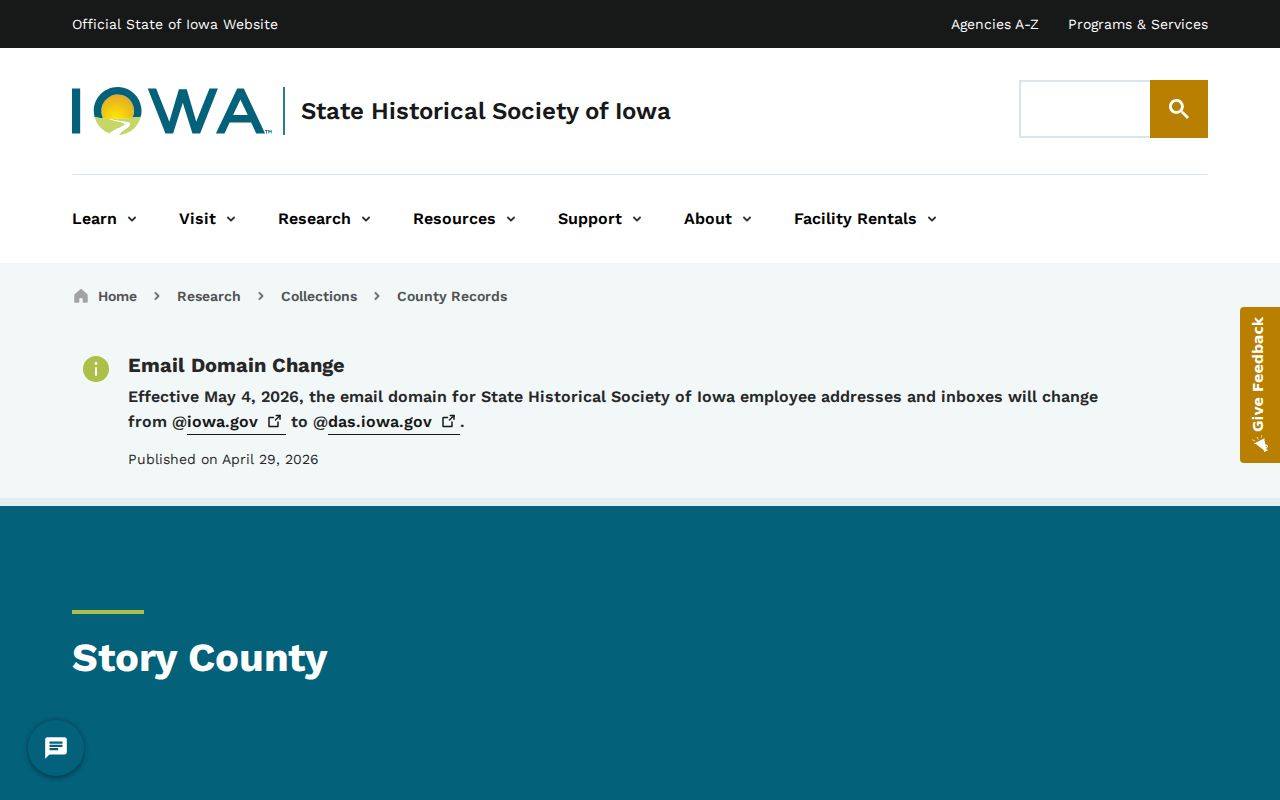
For an archive request, supply party names, the date range, legal description, and any book/page or instrument number found. At the Recorder counter in Nevada, call before a large search because recording-service hours end before the office closes.
The Ames Museum Route to Past Residents
The Ames History Museum research guide gives a local house-history sequence: begin with the assessor’s historic property card, trace Land Transfers, then compare Sanborn maps, the street-change list, Tribune references, and owner information. An abstract records a land sale, not the date a house was built.
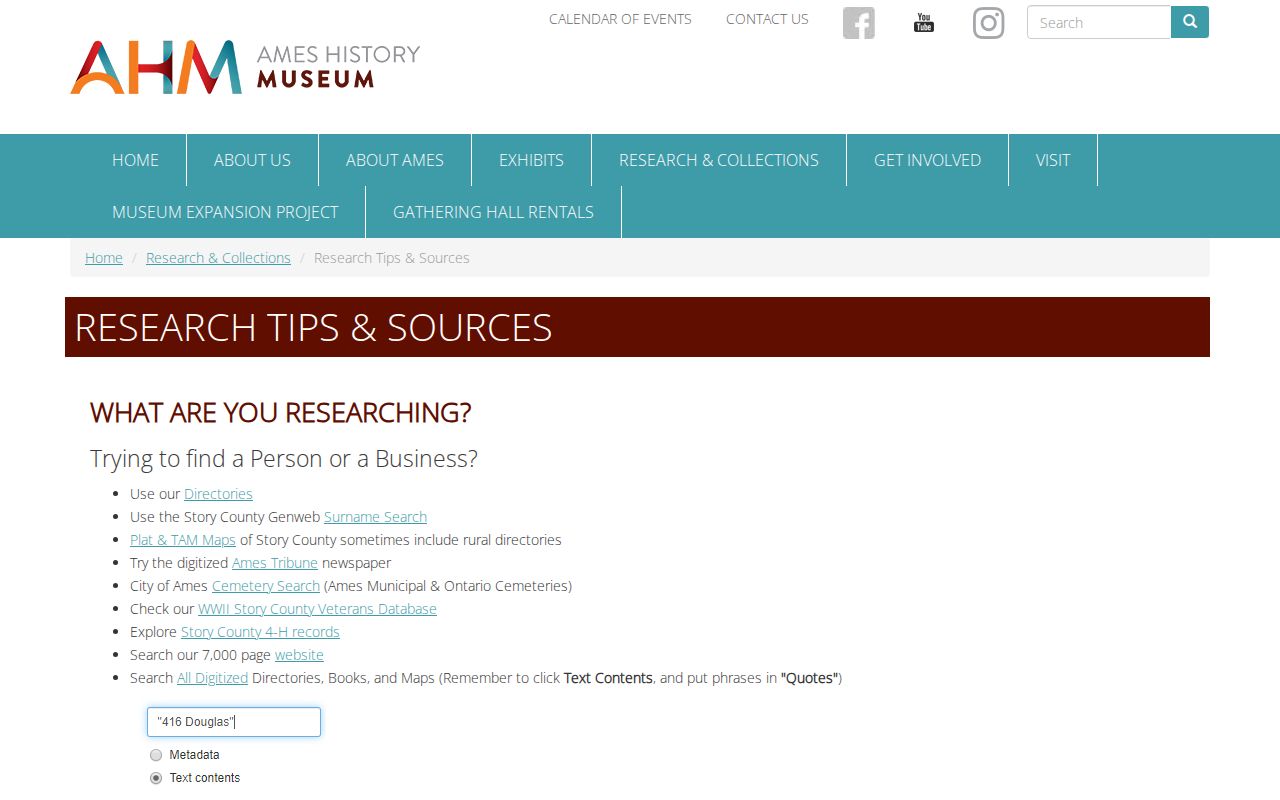
The Reading & Research Room is open Tuesday through Saturday, 10:00 to 4:00, while archive help is by appointment with at least two days’ notice. Include the address, time span, old street variants, and desired record type.
The 1910 Ames Street Names That Hide Previous Residents
Ames council action on March 30, 1910 changed many names. Boone became Lincoln Way, Iowa became 6th, Story became 5th, and Onondaga became Main. Broad became Sheldon Avenue, College Avenue became West Street, Park became 14th, Pearl became 10th, and Woodford became Wood.
This is a search-recovery tool, not trivia. Look under both names in a deed index, directory, newspaper, and map. Then compare the block, cross street, lot, and legal description. A publication can preserve an older usage, and annexation may shift a location between Ames and rural Story County descriptions.
Note: A parcel number and legal description usually survive a street-name change better than an old directory address.
Maps Date an Ames Address, Not Its Occupants
The museum’s maps and books collection gathers Sanborn maps, city and rural directories, yearbooks, newsletters, and local maps. Listed Sanborn years include 1896, 1900, 1911, 1920, 1926, a 1947 update, and 1961.
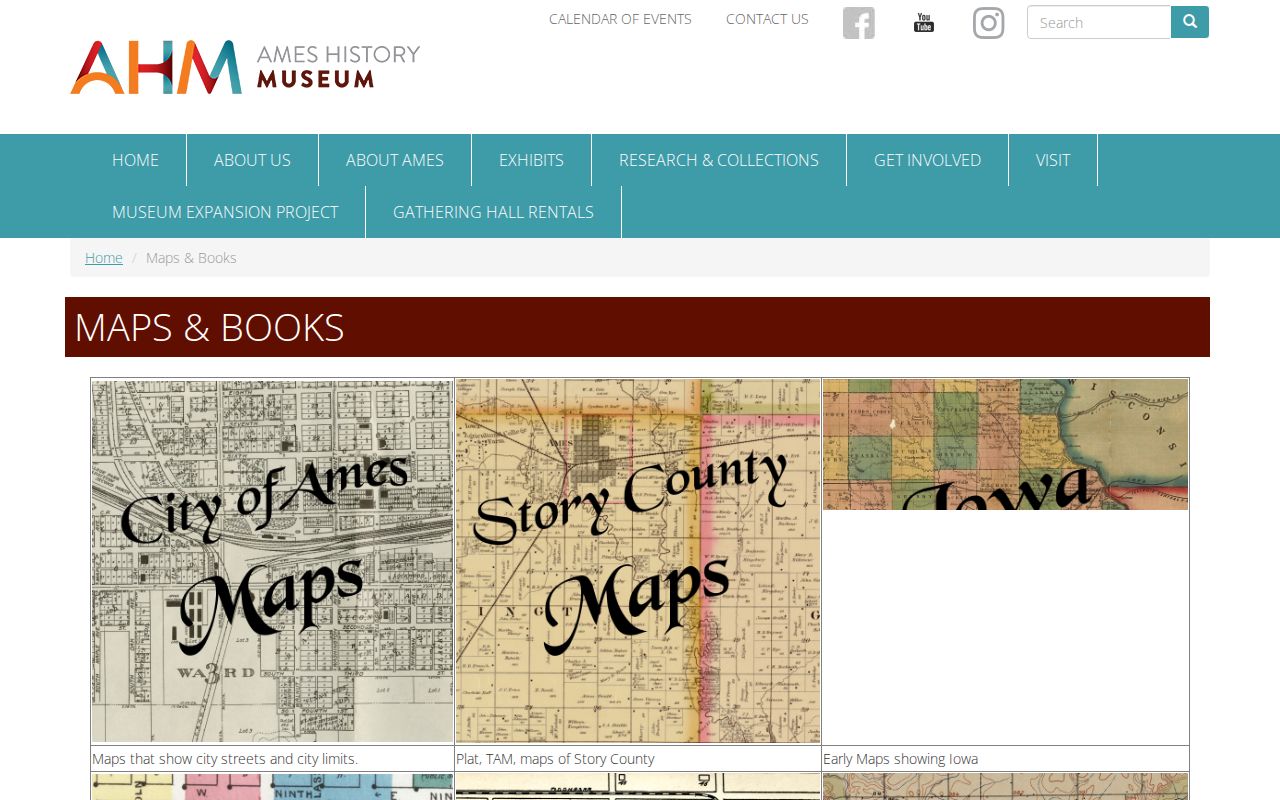
A sheet can show a building footprint, materials, floors, use, and fire-protection context. It cannot name each person inside. Pair it with a directory entry or census household before adding a person to the address timeline.
Pair Ames Directories and Census Years
Owners are only part of the story. Ames Public Library lists city-directory editions for 1899, selected years through 1961, and 1963-present. Telephone books cover many years beginning in 1916, while Iowa State digital directories cover 1901-1931. The collections belong to the Ames city directory guide; here they serve as dated address checks.
- Choose a directory near the transfer date and search the name and street guide.
- Copy the exact address, initials, spouse or occupation clues, and any owner mark.
- Check the nearest released federal census or Iowa/Story state census schedule.
- Compare household members, nearby names, address order, and dates.
A directory can omit unlisted people, and a census is not annual. Agreement is strong evidence. Disagreement calls for a wider date range and searches for initials, former surnames, and rural-route forms.
Historical Land Transfers for Ames Past Residents
The museum links researchers to the historical Land Transfers record room as one step between an assessor card and older sources.

Use an entry to refine the name, date, and instrument search. It is still an index clue. Confirm the recorded instrument and matching legal description before extending the chain.
Close an Ames Previous Residents Trail Carefully
The Ames Tribune archive reaches back to 1877 and may add an obituary, family notice, sale ad, or civic event. Probate can name heirs, executors, attorneys, and property. State holdings include a probate index and wills for 1855-1940, with other dockets and reports over varying spans. Ames permits can date work through EnerGov and monthly PDFs, but an applicant or owner is not proof of each occupant.
No complete public utility-customer archive or standalone Ames obituary index was found. Use library databases and microfilm, the museum room, Recorder counter, Clerk of Court, and State Historical Society as the fallback chain instead of filling that gap with a commercial list.
Lawful use. Research previous residents for house history, genealogy, an heir question, or personal curiosity. Never use an address trail to track, harass, or harm a living person.