
Ames City Directory Holdings
The Ames Public Library Heritage Room provides the clearest inventory of local directory years. Its printed series is not continuous before the modern run, so an absent year should be treated as a shelf gap, not proof that no directory was issued. The museum, Iowa State University, and newspaper archive add editions and companion sources that the library shelf alone cannot supply.
| Collection | Years | Where held | Access |
|---|---|---|---|
| Ames city directories, including Nevada and Story | 1899, 1917, 1919, 1922, 1936, 1940, 1949, 1952, 1954, 1956, 1958, 1959, 1961, 1963-present | Ames Public Library Heritage Room | In-person local-history collection |
| 1914 Directory of Story County | 1914 | Ames History Museum | Free PDF and FamilySearch catalog record |
| Polk's Ames City Directory | 1949 inspected edition | Heritage Room and genealogy index | Library volume; online section index |
| Ames telephone books | 1916, 1917, 1924, 1926-1942, 1944-1946, 1948, 1955-present | Heritage Room | In person |
| Iowa State directories | 1901-1931 | Iowa State digital collections | Free online data and downloads |
| Ames Tribune archive | Back to 1877 | Library-linked Advantage Archives and NewsBank | Historical web archive; current image access through library service |
Directory coverage changes by edition. A city book can list residents, firms, offices, churches, clubs, or street guides. A phone book records listed subscribers. A campus directory focuses on Iowa State. Each must be read within its stated scope.
The Ames Public Library Heritage Room publishes the local directory and microfilm holdings.
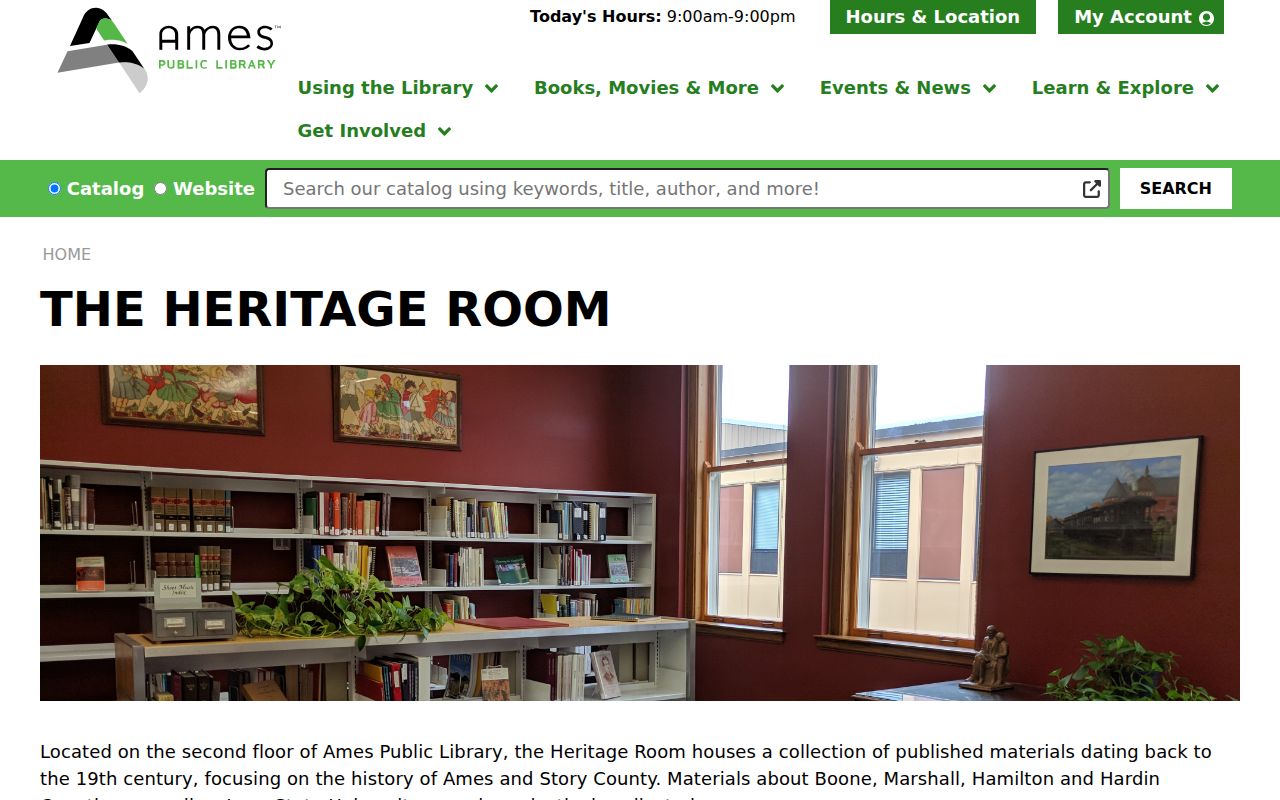
The captured library page is the starting point for confirming an edition before arranging a visit or staff question.
Ames Directory Years in Context
A short chronology shows how the local shelf grew. It also warns against treating one publisher's symbols or arrangement as universal.
| Year or span | Directory milestone |
|---|---|
| 1899 | Earliest Ames city directory year named on the Heritage Room list. |
| 1901-1931 | Iowa State directories preserve campus names and residence clues. |
| 1914 | Ames Evening Times published the 109-page county, city, town, and rural-route directory. |
| 1949 | R.L. Polk & Co. edition includes an alphabetical list and a separate householder street guide. |
| 1963-present | The Heritage Room reports a continuing modern run after irregular earlier years. |
The timeline marks surviving collections, not every publication event. No verified final printed year is given because the library lists the city directories through the present.
Ames in the 1914 Directory
The digitized 1914 Directory of Story County was published by the Ames Evening Times and runs 109 pages. Its index points to the Ames business and city lists, West Ames, Ames rural free delivery routes, Nevada, other towns, and rural sections. That arrangement makes it broader than a city-only surname list.
A typical entry gives a surname, given name or initial, an occupation or business, and a street address. Some entries mention Iowa State College. A leading asterisk means the publisher marked the person as owning the property where they lived. The mark is useful, but it is not a recorded deed.
The ownership asterisk is a rare local detail. It lets family researchers compare the publisher's canvass with the Story County land trail, while preserving the difference between a printed claim and official title.
Record the page. Copy the section, page number, exact punctuation, initials, occupation, address, and any printed symbol before moving to another source.
Read an Ames City Directory
Every edition should be read with its own title page, contents, and key. The 1914 book and the 1949 Polk run use different organizations. Later reverse guides may also distinguish an owner from another listed occupant, but the exact sign must be checked in that volume.
| Name | Surname plus a given name or initials; search spelling and initial variants. |
|---|---|
| Occupation or firm | Work or business wording printed for the listed person, sometimes with an Iowa State College reference. |
| Address | House number and street, ward, town, or rural route as that edition printed it. |
| Ownership sign | An edition-specific symbol such as the 1914 asterisk, which still needs assessor or deed confirmation. |
| Section and page | The exact place in an alphabetical, street, city, county, business, or rural-route section. |
- Criss-cross directory
- A later directory section arranged by street and number, allowing an address-to-name search.
- Householder index
- A street-order list of the person or household name selected by the publisher for each listed address.
- Abbreviation key
- The edition's own explanation of short forms and symbols. Photograph or transcribe it before interpreting an entry.
An entry can omit other members of a household. It can also lag a move, preserve an old spelling, or exclude an unlisted person. Treat it as a dated observation.
Reverse the 1949 Ames Directory
The indexed 1949 Polk volume separates the alphabetical list from the householder and street guide. The name list covers pages 25 through 244. The pink-paper street and avenue guide spans pages 245 through 287, while a Story County section appears around page 365.
Use the alphabetical section when a surname is known. Use the street guide when the address is known. Numbered streets appear in number order, named streets alphabetically, and intersecting streets help place a block. A later street-guide description indicates that entries may distinguish a houseowner from another listed occupant, but only the legend in the edition being read controls.
The guide also includes city and county offices, courts, churches, clubs, cemeteries, and classified firms. Those sections can explain an occupation or affiliation that appears beside a person's name.
Ames Directory Research at Library
The Heritage Room is on the second floor of Ames Public Library at 515 Douglas Avenue. It holds city directories, telephone books, Sanborn and plat maps, local newspapers, census microfilm, and selective Story County and Iowa State material. The listed hours are Sunday 1:00 to 5:00, Monday through Thursday 9:00 to 9:00, and Friday through Saturday 9:00 to 6:00.
Licensed databases expand the shelf. Ancestry Library Edition and FamilySearch affiliate access are available only in the library. HeritageQuest includes federal census material and local histories. The Ames Tribune archive and Farwell T. Brown Photo Archive add names, addresses, events, businesses, and street scenes.
The Ames Public Library database list identifies which historical tools are online and which require an in-library visit.
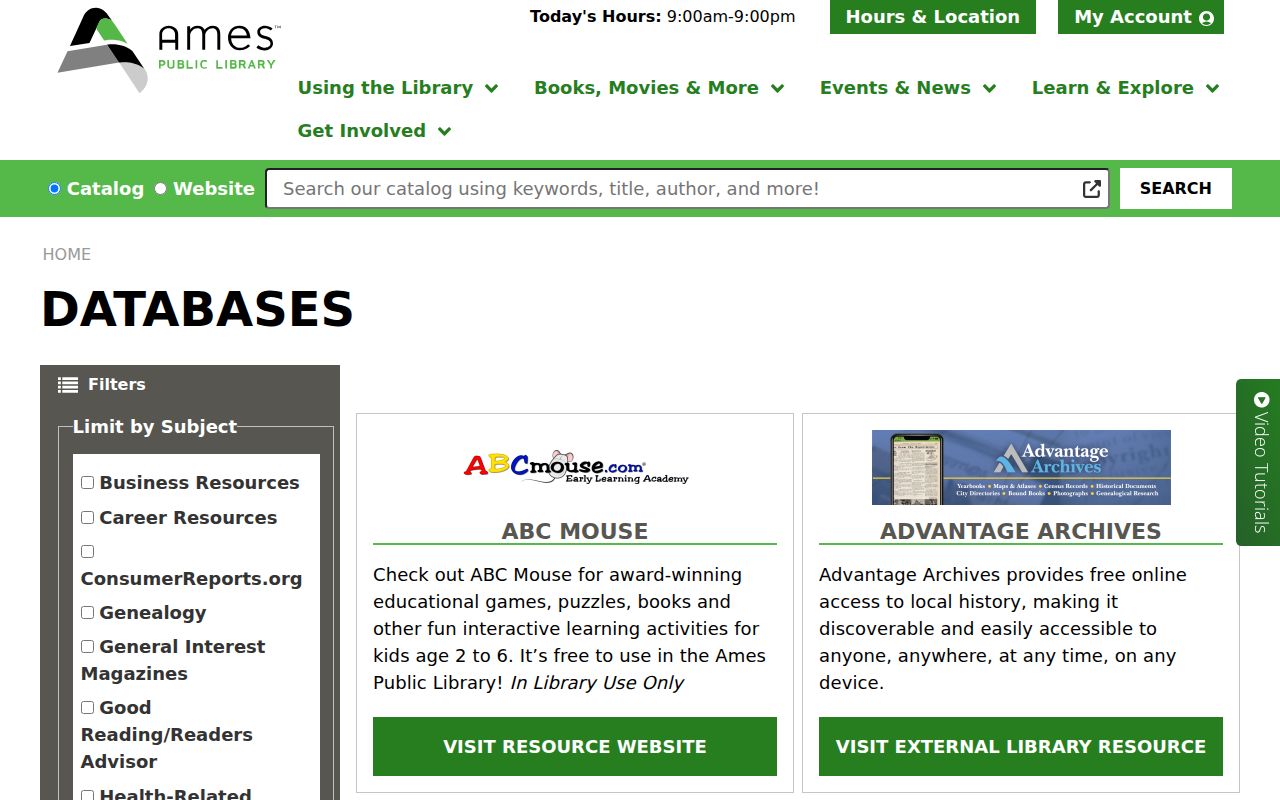
The database page helps plan the access channel before a search, especially when a licensed genealogy tool cannot be opened from home.
Ames City and Campus Directories
Iowa State University creates a second directory geography within Ames. Its digitized directories cover 1901 through 1931 and can include student or campus names, local addresses, advertisements, and institutional context. Search and download controls are paired with CSV and JSON metadata, making the collection useful when a city book abbreviates an Iowa State College tie.
The Iowa State digital directory collection provides the campus run and its structured data.
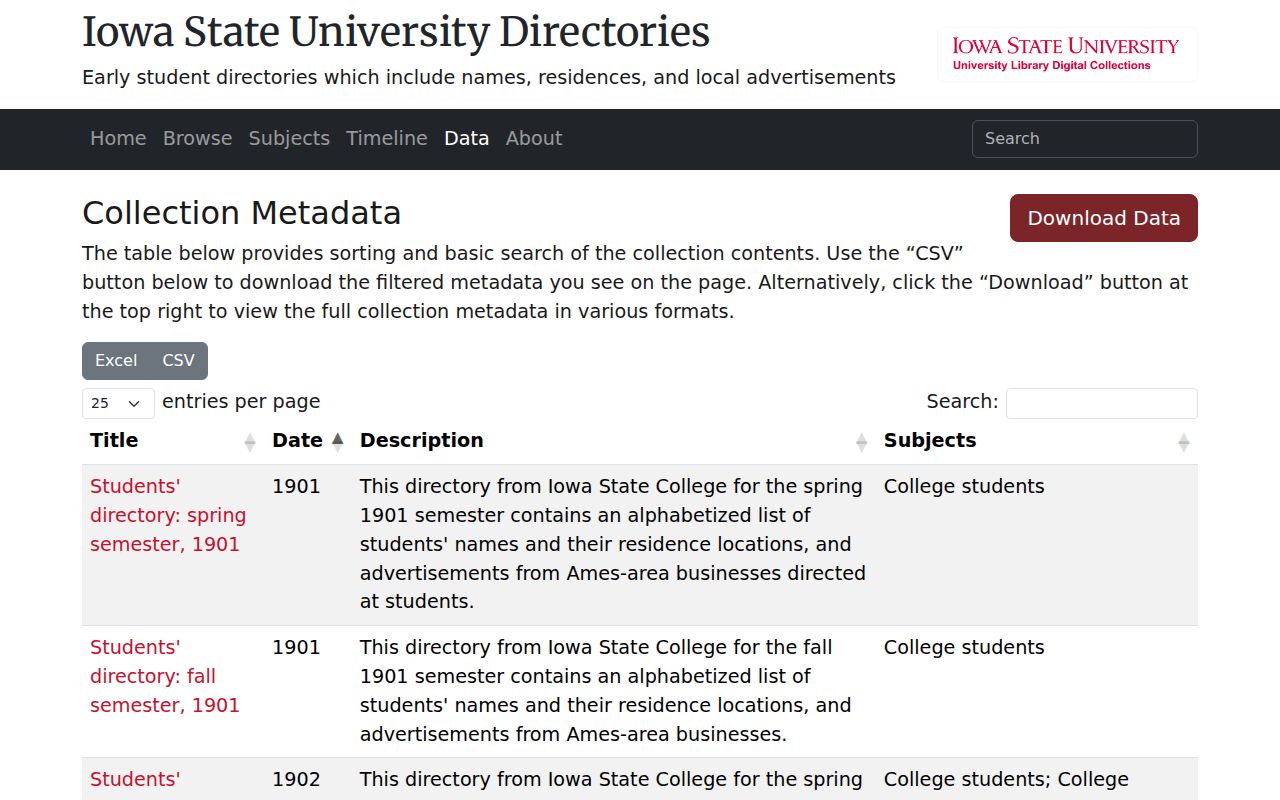
The university source can place a person in the campus setting, but it should be paired with the city volume, yearbook, student newspaper, or census before drawing a household conclusion.
Telephone books are another narrower source. They name listed subscribers, not every Ames resident. Still, their early and modern runs can bridge years when a city directory is absent.
Bridge Ames Directory Street Names
Ames changed many street names through a council action in March 1910. Boone became Lincoln Way, Iowa became 6th, Story became 5th, Onondaga became Main, and Woodford became Wood. A person can appear to move between editions when only the street label changed.
Search both names in directories and the Tribune archive. Then use the block, cross street, lot, parcel, or legal description to confirm continuity. The same method helps with rural routes and land later brought inside Ames through annexation.
This street-name bridge belongs beside every early Ames city directory search. It is a practical fix for a false gap, not just a local-history note.
Note: Keep old and current street forms in the same research log so later sources can be compared without losing the address chain.
Ames Directory Archives Beyond Library
The Ames History Museum Reading & Research Room holds local and genealogy books, city and rural directories, maps, photographs, yearbooks, cemetery routes, and subject collections. It is open Tuesday through Saturday from 10:00 to 4:00. Archive access and research help are arranged by appointment, with at least two days' notice requested.
The museum's online guides connect person and house research to land transfers, Sanborn maps, street-change lists, newspapers, and the Lincoln Highway address collection. The State Historical Society's Story County finding aid reaches older naturalization, probate, recorder, vital, church, funeral-home, and obituary series that are not one-click name databases.
The Ames local-history resource page links the library, museum, Iowa State, and state-level research routes.
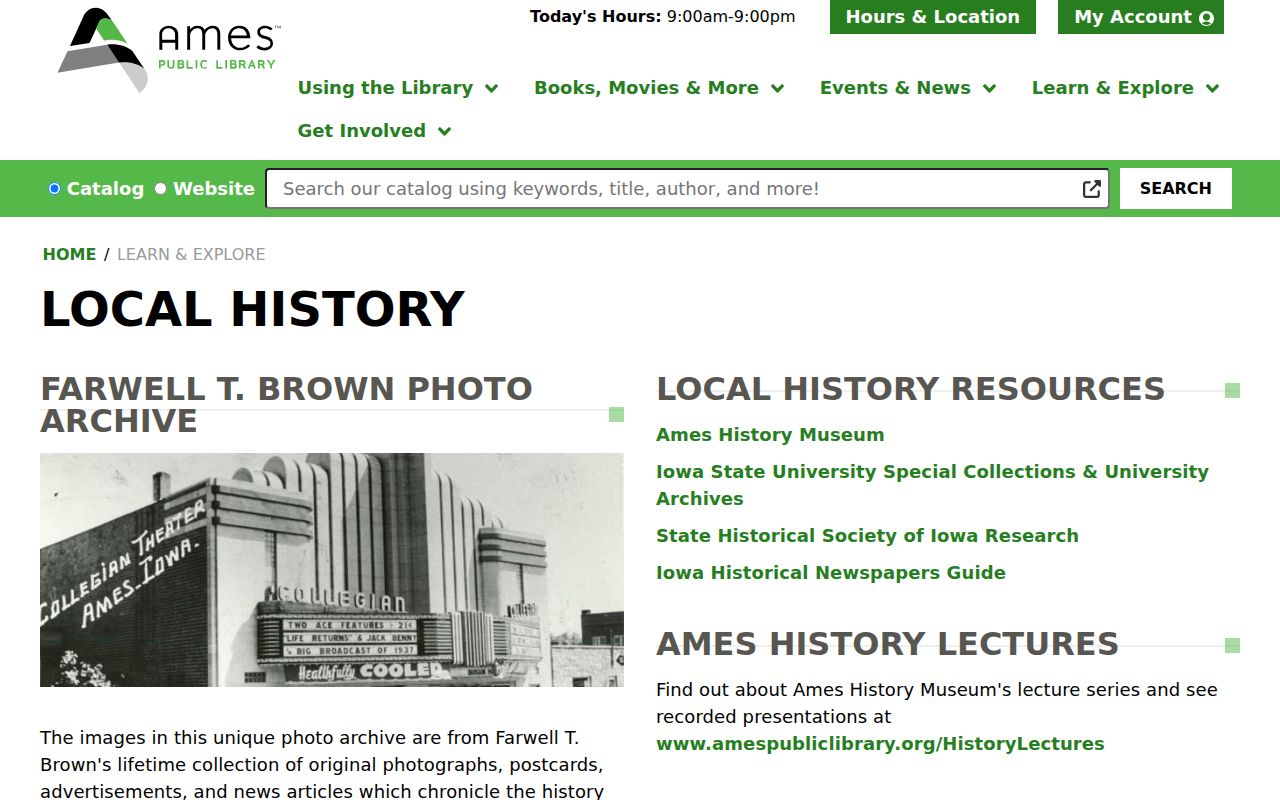
The referral list shows why an Ames directory search may move from one institution to another as the date and record type change.
Trace Family With Ames Directories
A directory places a listed adult at an address near publication time. A census records a household on its enumeration date. A newspaper can explain a move, death, marriage, firm, or civic role. Used together, they turn an isolated listing into a tested family-history trail.
- Choose the available Ames city directory year closest to the target date. Copy every printed field, symbol, section, and page.
- Read the street or householder guide in the same edition, if present. Note nearby numbers and intersections, but do not assume every nearby person shared a household.
- Repeat the name in the next available directory. Search initials, former surnames, and the old and new street names when the entry disappears.
- Pair the result with the nearest census. Local microfilm includes Iowa or Story schedules for 1915, 1920, and 1925, while federal sources add released household images.
- Use the Tribune archive, cemetery route, obituary or funeral notice, probate, and deed records to explain an endpoint or move.
The Ames Tribune archive reaches back to 1877, while the Iowa State directory run covers 1901 through 1931. Those two time spans are valuable around early shelf gaps. A missing name may reflect a move, death, publication omission, unlisted telephone, changed surname, or different initials.
When the goal shifts to a current parcel and deed chain, the Ames street directory search owns that modern address workflow.